
Understanding profit margins is crucial for the success of any small business. Profitability isn’t just about making money; it’s about ensuring long-term sustainability and growth. This guide delves into the intricacies of small business profit margins, exploring how they’re calculated, the factors influencing them, and strategies for improvement. We’ll examine various types of profit margins, analyze the impact of internal and external factors, and discuss how to leverage data for informed decision-making.
From optimizing pricing strategies and managing costs to understanding the competitive landscape and adapting to economic shifts, we’ll cover the key aspects needed to navigate the complexities of profitability in the dynamic world of small business ownership. We’ll also explore the critical link between healthy profit margins and securing funding, attracting investors, and ultimately achieving sustainable business growth.
Analyzing Profit Margin Data for Small Businesses
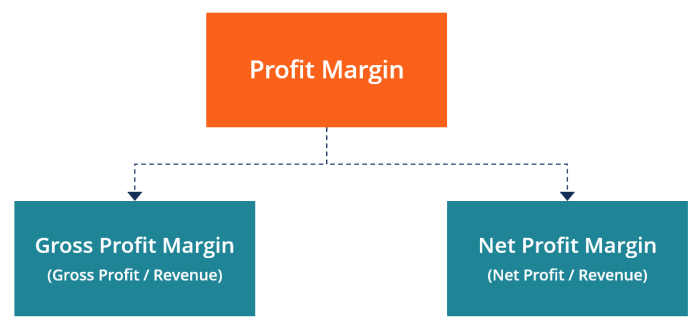
Understanding profit margins is crucial for the financial health and growth of any small business. Analyzing these margins allows business owners to identify areas for improvement, make informed decisions, and ultimately, increase profitability. This analysis involves calculating different types of profit margins and comparing them to industry benchmarks.
Calculating Profit Margins
Profit margins are expressed as a percentage and show the profitability of a business relative to its revenue. There are three primary types: gross profit margin, operating profit margin, and net profit margin. Each provides a different perspective on profitability at various stages of the business operation. We can illustrate this using a hypothetical example.Let’s assume “Acme Widgets,” a small widget manufacturing company, has the following financial data for the year:
| Item | Amount ($) |
|---|---|
| Sales Revenue | 100,000 |
| Cost of Goods Sold (COGS) | 40,000 |
| Operating Expenses (Salaries, Rent, Utilities, etc.) | 25,000 |
| Interest Expense | 2,000 |
| Taxes | 5,000 |
Using this data, we can calculate the different profit margins:
Gross Profit Margin = (Sales Revenue – COGS) / Sales Revenue – 100%
Gross Profit Margin = (100,000 – 40,000) / 100,000 – 100% = 60%
Operating Profit Margin = (Sales Revenue – COGS – Operating Expenses) / Sales Revenue – 100%
Operating Profit Margin = (100,000 – 40,000 – 25,000) / 100,000 – 100% = 35%
Net Profit Margin = (Sales Revenue – COGS – Operating Expenses – Interest Expense – Taxes) / Sales Revenue – 100%
Net Profit Margin = (100,000 – 40,000 – 25,000 – 2,000 – 5,000) / 100,000 – 100% = 28%
Benchmarking Profit Margins
Comparing Acme Widget’s profit margins to industry averages and competitors is essential for understanding its performance relative to the market. If the average gross profit margin for widget manufacturers is 55%, Acme’s 60% indicates a relatively strong performance in managing its production costs. However, if its operating and net profit margins are below the industry average, it suggests areas needing attention in operational efficiency and expense control.
Competitor analysis further refines this understanding, highlighting specific strengths and weaknesses compared to direct rivals.
Visual Representation of Profit Margin
Imagine a bar chart. The longest bar represents Sales Revenue ($100,000 in our example). From the top of this bar, a shorter bar representing the Cost of Goods Sold ($40,000) is subtracted. The remaining segment visually depicts the Gross Profit. From this Gross Profit segment, another bar representing Operating Expenses ($25,000) is subtracted, leaving the Operating Profit.
Finally, a further reduction representing Interest and Taxes ($7,000) is subtracted to show the Net Profit, the smallest segment at the bottom. The relative lengths of these bars clearly illustrate the relationship between revenue, costs, and the different levels of profit. The percentage of each segment relative to the total sales revenue visually represents the respective profit margins.
Profit Margins and Business Growth
Profit margins are not just a reflection of a small business’s financial health; they are a critical driver of its future growth and sustainability. Strong profit margins signal financial stability, efficiency, and the potential for future expansion, attracting both lenders and investors. Conversely, thin margins can hinder growth prospects and make securing funding a significant challenge. Understanding this dynamic is crucial for small business owners aiming for long-term success.Profit margins and access to capital are intrinsically linked.
High profit margins demonstrate a business’s ability to generate consistent revenue and manage expenses effectively. This makes it a much more attractive prospect for banks and investors who are assessing risk. Lenders are more likely to approve loans for businesses with a proven track record of profitability, while investors see high margins as an indicator of a healthy return on investment.
Conversely, low profit margins often signal financial instability and increased risk, making it difficult to secure funding for expansion or even day-to-day operations.
High Profit Margins and Reinvestment Strategies
Businesses boasting high profit margins have the luxury of reinvesting a significant portion of their earnings back into the business. This reinvestment can take various forms, all geared towards fueling growth. For instance, a company might invest in advanced technology to improve efficiency and reduce operational costs. This could involve upgrading equipment, implementing new software, or automating processes.
Another avenue for reinvestment is expanding the product line or service offerings, tapping into new markets, or improving marketing and sales strategies to increase customer acquisition. Finally, reinvestment can also focus on enhancing the customer experience through improved customer service, loyalty programs, or a more robust online presence. These strategic reinvestments are essential for sustained and accelerated growth.
Case Study: The Artisan Bread Bakery
The Artisan Bread Bakery, a small local bakery specializing in handcrafted sourdough bread, initially struggled with maintaining consistent profitability. Their initial profit margin was low due to high ingredient costs and inefficient production processes. Recognizing this, the owners implemented several strategies to improve their margins. They negotiated better deals with their suppliers, reducing ingredient costs. They also invested in a new, more efficient oven, which reduced baking time and energy consumption.
Furthermore, they refined their production processes, minimizing waste and optimizing labor. These changes significantly increased their profit margin. The increased profitability allowed them to invest in a larger retail space, expand their product line to include pastries and coffee, and implement a targeted marketing campaign focusing on local farmers’ markets and online ordering. This strategic reinvestment of profits resulted in a substantial increase in sales and brand recognition, leading to significant business growth and market share expansion.
The Artisan Bread Bakery’s success highlights the direct correlation between improved profit margins and the ability to fuel further growth and expansion.
Mastering the art of managing profit margins is essential for small business longevity. By understanding the different types of profit margins, identifying key influencing factors, and implementing effective improvement strategies, small business owners can build a financially resilient and thriving enterprise. Careful analysis of financial data, coupled with a proactive approach to cost management and revenue generation, paves the way for sustainable growth and long-term success.
Remember, consistent monitoring and adaptation are key to navigating the ever-changing business landscape.
Question Bank
What is the difference between gross, operating, and net profit margin?
Gross profit margin shows profit after deducting the cost of goods sold. Operating profit margin considers operating expenses. Net profit margin reflects profit after all expenses, including taxes and interest.
How frequently should I analyze my profit margins?
Ideally, monthly analysis allows for timely adjustments. Quarterly reviews provide a broader perspective on trends.
What are some common mistakes businesses make regarding profit margins?
Underpricing products/services, poor cost control, insufficient market research, and neglecting pricing adjustments are common pitfalls.
Can I use profit margin analysis to compare my business to competitors?
Yes, benchmarking against industry averages and competitors provides valuable insights into your relative performance and areas for improvement.


