
Navigating the complexities of the service industry requires a keen understanding of profitability. This guide delves into the multifaceted world of service industry profit margins, exploring the factors that influence them, effective pricing strategies, and operational efficiencies that contribute to success. We’ll examine various sectors, comparing their typical profit margins and highlighting key cost structures. Understanding these dynamics is crucial for businesses aiming to thrive in a competitive landscape.
From analyzing cost breakdowns and pricing models to identifying opportunities for revenue growth and cost reduction, we provide practical insights and actionable strategies. The impact of external factors, such as economic conditions and market trends, will also be considered, offering a holistic view of profit maximization in the service sector.
Defining Service Industry Profit Margins
Service industry profit margins represent the profitability of a business after deducting all operating expenses from its revenue. Understanding these margins is crucial for businesses to assess their financial health, make informed decisions, and plan for future growth. A high profit margin indicates strong financial performance, while a low margin may signal the need for operational improvements or strategic adjustments.Service industry profit margins are influenced by a complex interplay of factors.
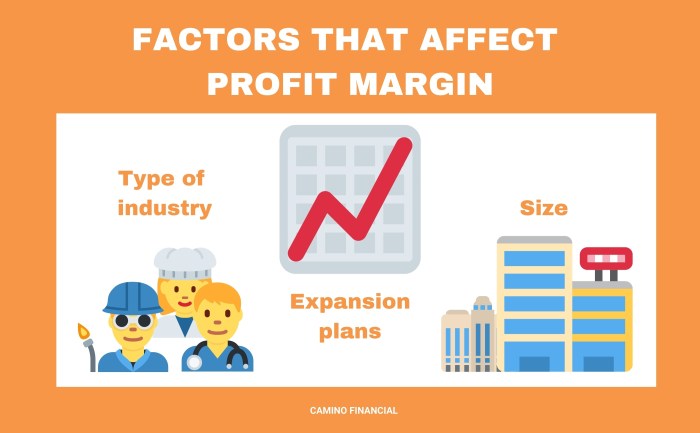
These factors can be broadly categorized as internal and external. Internal factors include pricing strategies, operational efficiency, cost management, and employee productivity. External factors include competition, economic conditions, regulatory changes, and technological advancements. For example, a highly efficient service provider with a strong brand reputation can command higher prices and achieve greater profit margins compared to a less efficient competitor.
Similarly, economic downturns can significantly impact consumer spending and subsequently reduce profit margins across the service sector.
Factors Influencing Service Industry Profit Margins
Several key factors significantly influence profit margins within the service industry. Pricing strategies play a vital role, with higher prices generally leading to higher margins, but only if demand remains strong enough to support those prices. Operational efficiency, including streamlined processes and reduced waste, directly impacts profitability. Effective cost management, encompassing careful control of labor, materials, and overhead expenses, is also critical.
Employee productivity and skill levels directly affect output and profitability. Finally, external factors such as economic fluctuations and competitive pressures exert significant influence on a service business’s bottom line. A robust marketing strategy that effectively communicates value to customers can also contribute to stronger profit margins.
Service Sector Profit Margin Ranges
Different service sectors exhibit varying typical profit margin ranges. These variations stem from factors such as the intensity of competition, the complexity of services offered, and the level of capital investment required. For instance, highly specialized professional services like consulting or legal services often command higher margins compared to more standardized services like retail or food services. The level of automation and technology used also plays a significant role; sectors that heavily rely on technology may have higher fixed costs, impacting margins differently than labor-intensive industries.
Comparative Analysis of Service Industry Profit Margins
| Sector | Average Profit Margin | Factors Affecting Margin | Examples of Businesses |
|---|---|---|---|
| Professional Services (e.g., Consulting, Legal) | 15-30% | High skill level, specialized expertise, pricing power, low variable costs | McKinsey & Company, Deloitte, Law firms |
| Healthcare (e.g., Hospitals, Clinics) | 5-15% | High operating costs, regulatory pressures, reimbursement rates, competition | Hospitals, medical clinics, nursing homes |
| Retail (e.g., Restaurants, Salons) | 3-10% | High competition, labor costs, inventory management, customer traffic | Restaurants, hair salons, clothing stores |
| Hospitality (e.g., Hotels, Tourism) | 10-20% | Seasonality, occupancy rates, operating costs, customer satisfaction | Hotels, resorts, travel agencies |
Cost Structures in the Service Industry
Understanding the cost structure of a service business is crucial for determining profitability and setting appropriate pricing strategies. Service businesses, unlike those selling physical goods, primarily deal with intangible offerings, impacting how costs are incurred and managed. This section details the key cost components and their influence on profit margins.
Service businesses typically face a blend of fixed and variable costs, each impacting profitability differently. Fixed costs remain constant regardless of the volume of services provided, while variable costs fluctuate directly with service output. Effectively managing this cost mix is key to maximizing profit margins.
Key Cost Components of Service Businesses
Several key cost components significantly influence the profitability of service businesses. These costs need careful consideration during planning and operational management to ensure sustainable profitability.
- Labor Costs: This is often the largest expense for service businesses, encompassing salaries, wages, benefits, and payroll taxes for employees. The skill level and experience required for the service directly impact labor costs.
- Rent and Utilities: The cost of office space, retail locations, or other physical facilities, along with associated utilities (electricity, water, internet), represents a significant fixed cost. Location and size directly influence this expense.
- Marketing and Advertising: Attracting and retaining clients requires investment in marketing and advertising. This can include online marketing, print advertising, public relations, and event participation. The effectiveness of these efforts greatly impacts return on investment.
- Supplies and Materials: Depending on the type of service, consumable supplies and materials can be a significant cost factor. For example, a hair salon will have costs associated with hair products, while a consulting firm may have expenses related to printing and stationery.
- Technology and Software: Many service businesses rely on technology and software for operations and communication. This includes costs associated with software licenses, hardware maintenance, and IT support. The complexity and requirements of the service dictate this cost.
Impact of Fixed versus Variable Costs on Profit Margins
The proportion of fixed and variable costs significantly impacts a service business’s profit margins. Understanding this relationship allows for better financial planning and decision-making.
High fixed costs mean that a business needs to generate a higher volume of sales to cover these expenses and reach profitability. Conversely, businesses with predominantly variable costs see profits fluctuate more directly with sales volume. A balanced approach, where fixed costs are managed effectively while variable costs are controlled through efficient operations, is often ideal.
A higher proportion of fixed costs increases the break-even point, meaning the business needs to generate more revenue before turning a profit.
Cost Breakdown for a Hypothetical Service Business
Consider a hypothetical consulting firm offering strategic planning services. The following illustrates a potential cost breakdown:
| Cost Category | Annual Cost | Percentage of Total Costs |
|---|---|---|
| Labor (Salaries, Benefits) | $150,000 | 60% |
| Rent and Utilities | $20,000 | 8% |
| Marketing and Advertising | $15,000 | 6% |
| Supplies and Materials (Printing, Software) | $5,000 | 2% |
| Technology and Software Licenses | $10,000 | 4% |
| Other Expenses (Insurance, Professional Fees) | $20,000 | 8% |
| Total Costs | $220,000 | 100% |
In this example, labor costs represent the largest expense, highlighting the importance of efficient staffing and compensation strategies. Understanding this detailed cost breakdown allows the firm to make informed decisions about pricing and resource allocation to improve profitability.
Pricing Strategies and Their Impact on Profitability
Effective pricing is crucial for service businesses to achieve and maintain healthy profit margins. The right strategy can significantly impact revenue and profitability, while a poorly chosen approach can lead to lost revenue and unsustainable operations. Understanding the various pricing models and their implications is essential for sustainable growth.Pricing strategies in the service industry are multifaceted, requiring a careful consideration of costs, competition, and the perceived value of the service offered.
The choice of strategy often depends on the specific nature of the service, the target market, and the overall business objectives. Incorrect pricing can quickly erode profitability, making a thorough understanding of these strategies paramount.
Value-Based Pricing, Cost-Plus Pricing, and Competitive Pricing Compared
Value-based pricing focuses on the perceived value a customer receives from the service. This approach often involves setting a higher price than competitors, justified by superior quality, unique features, or exceptional customer service. Conversely, cost-plus pricing involves calculating the total cost of providing the service and adding a predetermined markup percentage to determine the price. This method ensures profitability but might not be optimal if the market is price-sensitive or competitors offer similar services at lower prices.
Competitive pricing, on the other hand, involves setting prices based on what competitors are charging for similar services. This approach can be effective in highly competitive markets but may lead to lower profit margins if costs are not carefully managed.
Effective Pricing Strategies to Improve Profit Margins
Implementing effective pricing strategies can significantly boost profit margins. This often involves a combination of approaches. For example, a service provider might use value-based pricing for premium services while employing cost-plus pricing for standard offerings. Analyzing customer segmentation and price elasticity is crucial. Understanding how much customers are willing to pay for different service levels allows for optimized pricing across the service portfolio.
Furthermore, regularly reviewing and adjusting prices based on market conditions and cost fluctuations ensures that the pricing strategy remains aligned with business objectives and market realities. This dynamic approach allows businesses to adapt to changing circumstances and maintain profitability.
Scenario: Impact of a Pricing Strategy Change on a Service Business
Consider a small landscaping company currently using a cost-plus pricing strategy with a 20% markup. Their average job costs $200, resulting in a price of $240. Their profit margin is 16.7% (($240-$200)/$240). Facing increased competition, they decide to shift to a value-based pricing strategy, highlighting their expertise in organic gardening and sustainable practices. They increase their prices for premium services to $300, while maintaining their cost-plus pricing for standard services.
Assume that the higher-priced services represent 40% of their business. With this change, let’s assume that the volume of standard jobs remains the same, while the volume of premium jobs increases slightly, leading to a 10% overall increase in total jobs. This results in an overall increase in revenue, even if the number of standard jobs remains unchanged.
This new strategy may also lead to higher profit margins due to increased revenue from the premium services and an increased volume of work overall, exceeding the loss in profit margin on standard jobs. The exact impact will depend on the costs associated with the premium services and the actual increase in volume. A detailed analysis using financial modeling would be needed for precise quantification.
Operational Efficiency and Profit Margins
Operational efficiency is the cornerstone of profitability in the service industry. Businesses that streamline processes, optimize resource allocation, and leverage technology effectively can significantly improve their bottom line. Even small gains in efficiency can translate into substantial increases in profit margins, particularly in sectors with inherently low margins. This section explores key operational areas impacting profitability and Artikels strategies for enhancing efficiency.Improving operational efficiency directly translates to higher profit margins.
By reducing wasted time, resources, and effort, service businesses can free up capital for reinvestment, expansion, or increased profitability. Efficient operations also lead to improved customer satisfaction through faster service delivery and enhanced quality. This, in turn, can foster customer loyalty and generate positive word-of-mouth referrals, further boosting revenue.
Key Operational Areas Impacting Profitability
Several key operational areas significantly influence a service business’s profitability. These include staff productivity, process optimization, technology adoption, and inventory management (where applicable). Inefficiencies in any of these areas can lead to increased costs and reduced profit margins. Conversely, improvements in these areas can dramatically boost the bottom line. For instance, a restaurant optimizing its kitchen workflow can reduce food waste and labor costs, directly impacting profitability.
Similarly, a consulting firm utilizing project management software can streamline processes, leading to faster project completion and higher billable hours.
Process Optimization and its Impact on Profitability
Process optimization involves analyzing existing workflows to identify and eliminate bottlenecks, redundancies, and inefficiencies. This systematic approach can significantly reduce operational costs and improve productivity. For example, a customer service department can implement a knowledge base system to empower employees to resolve common issues quickly, reducing call handling time and improving customer satisfaction. The implementation of lean methodologies, such as Kaizen, can also lead to continuous improvement and optimized processes, minimizing waste and maximizing efficiency.
By streamlining processes, businesses can improve service delivery speed, reduce errors, and increase employee satisfaction, all contributing to higher profit margins.
Technology Adoption for Enhanced Efficiency
Technology plays a crucial role in enhancing operational efficiency. Investing in appropriate technologies can automate tasks, improve communication, and enhance data analysis, leading to better decision-making and improved profitability. For example, Customer Relationship Management (CRM) software can centralize customer data, enabling personalized service and targeted marketing campaigns. Project management software can help track progress, allocate resources effectively, and improve team collaboration, reducing project completion time and associated costs.
Furthermore, the adoption of cloud-based solutions can reduce IT infrastructure costs and enhance scalability.
Best Practices for Improving Operational Efficiency
Effective operational efficiency requires a multi-faceted approach. The following best practices can help service businesses optimize their operations and improve profit margins:
- Regularly review and analyze processes: Identify bottlenecks and areas for improvement through data analysis and employee feedback.
- Implement automation where possible: Automate repetitive tasks to free up staff for higher-value activities.
- Invest in employee training and development: Empower employees with the skills and knowledge to perform their tasks efficiently and effectively.
- Leverage technology to streamline operations: Utilize software and tools to improve communication, collaboration, and data analysis.
- Optimize resource allocation: Ensure that resources are allocated effectively to maximize productivity and minimize waste.
- Monitor key performance indicators (KPIs): Track progress and identify areas requiring attention.
- Foster a culture of continuous improvement: Encourage employees to identify and implement improvements.
PROFIT MARGINS
Understanding profit margins requires considering not only internal factors like cost control and pricing strategies, but also the significant influence of external forces. These external pressures can significantly impact a service business’s ability to maintain or improve profitability, regardless of its internal efficiency. This section will explore some key external factors that shape service industry profit margins.
Economic Conditions and Profitability
Economic downturns, such as recessions, drastically reduce consumer spending. This directly impacts service businesses reliant on discretionary spending, like restaurants, entertainment venues, and travel agencies. Reduced demand leads to lower prices and potentially lower profit margins as businesses compete for fewer customers. Conversely, inflationary periods increase operating costs, from wages and supplies to rent and utilities. If businesses cannot pass these increased costs onto consumers through price hikes (due to competition or reduced demand), profit margins shrink.
For example, a cleaning service facing rising fuel costs might struggle to maintain profitability if they cannot adjust their pricing to reflect these increased expenses. The 2008 financial crisis serves as a stark example; many service businesses experienced significant profit margin reductions due to decreased consumer spending and increased borrowing costs.
Competition and Market Saturation
Intense competition can significantly erode profit margins. In saturated markets with numerous service providers offering similar services, businesses often engage in price wars to attract customers, leading to lower profit margins for all players. For instance, the ride-sharing industry (Uber, Lyft) is characterized by intense competition and frequent price fluctuations, impacting the profitability of individual drivers and the companies themselves.
Market saturation also limits the pricing power of individual businesses. If there are many similar businesses offering the same service, it’s difficult to command premium prices, directly affecting profit margins.
Government Regulations and Industry Trends
Government regulations, such as licensing requirements, environmental regulations, or minimum wage laws, can increase operating costs and affect profitability. For example, stricter environmental regulations on waste disposal might increase costs for a landscaping business. Similarly, changes in minimum wage laws can directly impact labor costs, which are often a significant expense for service businesses. Industry trends also play a crucial role.
The rise of technology, for instance, can disrupt traditional service models. Businesses that fail to adapt to these trends, such as travel agencies struggling to compete with online booking platforms, might see their profit margins decline or even face closure. The increasing adoption of telehealth is reshaping the healthcare industry, forcing traditional clinics to adapt or risk losing market share and profitability.
Analyzing Profitability Trends
Understanding historical profit margin trends within the service industry is crucial for informed decision-making and strategic planning. Analyzing this data allows businesses to identify periods of growth and decline, pinpoint contributing factors, and proactively adjust their strategies to maintain or improve profitability. This analysis also provides a benchmark against which current performance can be measured and future projections made.Analyzing historical service industry profit margins reveals a complex picture influenced by economic cycles, technological advancements, and competitive pressures.
For example, data from the U.S. Bureau of Economic Analysis shows fluctuations in profit margins across various service sectors. During periods of economic expansion, margins tend to improve as consumer spending increases. Conversely, during recessions, margins often contract due to reduced demand and increased price sensitivity among consumers. The impact varies considerably depending on the specific service sector; for instance, essential services like healthcare might experience less volatility compared to discretionary services like entertainment.
Technological advancements can simultaneously increase efficiency and disrupt existing business models, influencing profit margins in unpredictable ways.
Key Performance Indicators (KPIs) for Profitability Monitoring
Effective monitoring of profitability requires a focus on key performance indicators (KPIs). These metrics provide a quantifiable measure of a service business’s financial health and operational efficiency. Regularly tracking these KPIs allows businesses to identify areas for improvement and make data-driven decisions.
| KPI | Description | Significance |
|---|---|---|
| Gross Profit Margin | (Revenue – Cost of Goods Sold) / Revenue | Indicates the profitability of core services before operating expenses. |
| Net Profit Margin | Net Income / Revenue | Shows the overall profitability after all expenses are deducted. |
| Customer Acquisition Cost (CAC) | Total marketing and sales costs / Number of new customers acquired | Measures the cost of acquiring each new customer. |
| Customer Lifetime Value (CLTV) | Average revenue per customer
|
Estimates the total revenue generated by a customer over their relationship with the business. |
| Operating Expenses Ratio | Operating Expenses / Revenue | Shows the proportion of revenue spent on operating the business. |
Hypothetical Case Study: Analyzing Profit Margins at “GreenThumb Lawn Care”
GreenThumb Lawn Care, a hypothetical landscaping business, experienced a decline in its net profit margin from 15% to 10% over the past year. To investigate this, they analyzed their financial data using the KPIs mentioned above. They discovered that while their revenue increased slightly, their operating expenses ratio rose significantly from 60% to 70%.
Further investigation revealed that increased fuel costs and rising employee wages contributed to this increase. Additionally, their customer acquisition cost increased due to less effective marketing campaigns. GreenThumb addressed these issues by negotiating better fuel contracts, streamlining operational processes to reduce labor costs, and implementing a more targeted digital marketing strategy. By focusing on these areas, they projected a return to a 12% net profit margin within the next year.
This case illustrates how detailed analysis of profit margins and relevant KPIs can guide strategic improvements.
Ultimately, maximizing service industry profit margins hinges on a strategic blend of efficient operations, effective pricing, and a deep understanding of market dynamics. By carefully analyzing cost structures, implementing smart pricing strategies, and continually striving for operational excellence, service businesses can not only improve their profitability but also ensure sustainable growth and long-term success. This comprehensive overview provides the foundational knowledge necessary for navigating the complexities of this dynamic industry.
Common Queries
What is a healthy profit margin for a service business?
A healthy profit margin varies significantly by industry and business model. Generally, a margin of 10-20% is considered good, but some businesses operate profitably with lower margins while others aim for much higher ones.
How can I improve my service business’s profit margin quickly?
Quick wins often involve streamlining operations to reduce costs (e.g., negotiating better supplier rates, optimizing staffing), and implementing a more effective pricing strategy (e.g., adjusting pricing to reflect value, upselling/cross-selling).
What are some common pitfalls that hurt service industry profit margins?
Common pitfalls include underpricing services, failing to account for all costs (hidden or indirect), inefficient resource allocation, and inadequate marketing/sales strategies leading to low customer acquisition and retention.


