Understanding profit margins is crucial for any business, regardless of size or industry. It’s the lifeblood of financial health, revealing not just how much money a company makes, but also its efficiency and long-term viability. Profit margins, at their core, represent the percentage of revenue left over after deducting costs, providing a clear picture of profitability and financial strength.
This guide delves into the different types of profit margins – gross, operating, and net – explaining their calculations and interpretations to help you navigate the complexities of financial analysis.
We’ll explore how these calculations provide valuable insights for strategic decision-making, from pricing strategies to investment choices. By understanding the factors influencing profit margins, both internal and external, you can identify opportunities for improvement and navigate challenges effectively. We will also examine how different business models impact profit margin analysis, allowing for a more nuanced understanding of profitability across various industries.
Defining Profit Margins
Profit margins are crucial indicators of a business’s financial health, showing how efficiently it converts revenue into profit. Understanding different types of profit margins provides a more comprehensive picture of profitability than simply looking at the bottom line. Essentially, a profit margin expresses profit as a percentage of revenue, allowing for easy comparison across different businesses and time periods.
Types of Profit Margins
Profit margins are categorized to reflect different stages of the business’s revenue and expense cycle. This allows for a more granular analysis of profitability, pinpointing areas of strength and weakness. The three most common types are gross profit margin, operating profit margin, and net profit margin.
Gross Profit Margin
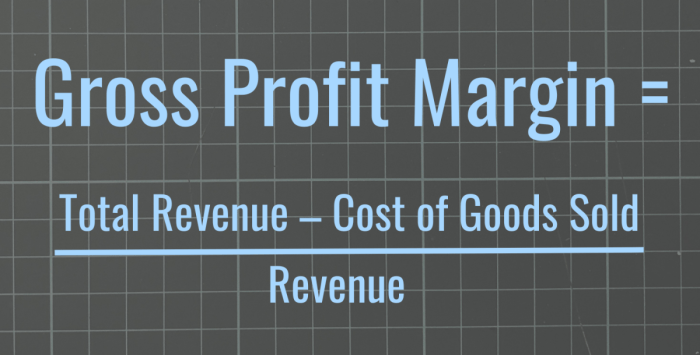
Gross profit margin measures the profitability of a company’s core operations, specifically the difference between revenue and the direct costs of producing goods or services. It provides insight into pricing strategies and efficiency in production. For example, a company selling handmade jewelry would calculate its gross profit margin by subtracting the costs of materials and direct labor from its revenue.
A higher gross profit margin generally indicates better pricing power or efficient production.
Operating Profit Margin
Operating profit margin takes a broader view of profitability, considering both direct and indirect costs associated with running the business. This includes expenses like salaries, rent, and utilities, in addition to direct production costs. This margin reveals how efficiently a company manages its overall operations. Consider a restaurant: its operating profit margin would subtract food costs, labor, rent, and utilities from its revenue, providing a clearer picture of operational efficiency beyond just the food costs.
Net Profit Margin
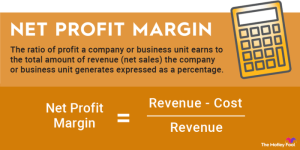
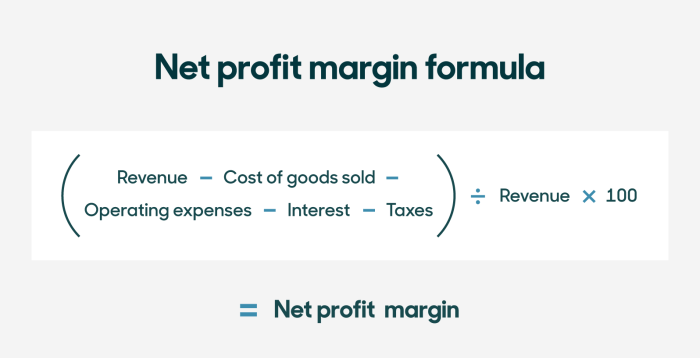
Net profit margin represents the ultimate profitability of a business after all expenses, including taxes and interest, have been deducted from revenue. This is the “bottom line” profit and provides the clearest picture of overall financial success. Imagine a software company: its net profit margin would account for all operational expenses, interest payments on loans, and taxes before arriving at the final profit figure.
This is the most comprehensive measure of profitability.
Profit Margin Calculation Comparison
The key difference between these margins lies in the expenses included in the calculation. Gross profit margin only considers direct costs, while operating profit margin adds indirect costs, and net profit margin incorporates all expenses, including taxes and interest. This tiered approach allows for a more thorough analysis of a company’s financial performance.
Profit Margin Formulas
| Profit Margin Type | Formula | Description | Example |
|---|---|---|---|
| Gross Profit Margin | (Revenue - Cost of Goods Sold) / Revenue |
Profitability after deducting direct costs. | (100,000 – 60,000) / 100,000 = 40% |
| Operating Profit Margin | (Revenue - Cost of Goods Sold - Operating Expenses) / Revenue |
Profitability after deducting direct and indirect costs. | (100,000 – 60,000 – 20,000) / 100,000 = 20% |
| Net Profit Margin | (Net Income) / Revenue |
Profitability after all expenses, including taxes and interest. | (100,000 – 60,000 – 20,000 – 10,000) / 100,000 = 10% |
Calculating Profit Margins
Understanding how to calculate profit margins is crucial for assessing a business’s financial health and profitability. Different types of profit margins offer insights into various aspects of the business’s performance, allowing for a more comprehensive analysis. This section will detail the calculation of gross, operating, and net profit margins, providing clear steps and examples.
Gross Profit Margin Calculation
Gross profit margin measures the profitability of a company’s core business operations after deducting the direct costs of producing goods or services. It shows how efficiently a company manages its production costs. The calculation is straightforward:
Gross Profit Margin = (Revenue – Cost of Goods Sold) / Revenue – 100%
To illustrate, let’s consider a hypothetical bakery. Suppose the bakery generated $50,000 in revenue and incurred $20,000 in costs of goods sold (ingredients, direct labor). The gross profit margin would be:
($50,000 – $20,000) / $50,000 – 100% = 60%
This indicates that 60% of the bakery’s revenue remains after covering direct production costs.
Operating Profit Margin Calculation
Operating profit margin provides a broader picture of profitability by considering both direct and indirect costs associated with running the business. It reveals how efficiently a company manages its overall operations, excluding financing and tax impacts. Operating expenses encompass a wide range of costs, including rent, utilities, salaries (excluding direct labor included in COGS), marketing, and administrative expenses.
Operating Profit Margin = (Revenue – Cost of Goods Sold – Operating Expenses) / Revenue – 100%
Using the same bakery example, let’s assume operating expenses totaled $15,
000. The operating profit margin would then be
($50,000 – $20,000 – $15,000) / $50,000 – 100% = 30%
This shows that after accounting for both direct and indirect costs, 30% of revenue remains as operating profit.
Net Profit Margin Calculation
Net profit margin represents the ultimate profitability of a business after all expenses, including taxes and interest, are deducted. It provides the clearest indication of a company’s overall financial success.
Net Profit Margin = (Net Profit / Revenue) – 100%
Where Net Profit = Revenue – Cost of Goods Sold – Operating Expenses – Interest – Taxes.Continuing with the bakery example, let’s suppose the bakery incurred $2,000 in interest expense and $5,000 in taxes. The net profit would be:
$50,000 – $20,000 – $15,000 – $2,000 – $5,000 = $8,000
Therefore, the net profit margin would be:
($8,000 / $50,000) – 100% = 16%
This demonstrates that after all expenses, only 16% of the bakery’s revenue translates into net profit.
Interpreting Profit Margins
Understanding profit margins is crucial for assessing a business’s financial health and profitability. A simple calculation doesn’t tell the whole story; interpreting those numbers requires context and a nuanced understanding of the factors that influence them. This section explores the significance of different margin levels and the varied implications across industries.Profit margins, whether gross, operating, or net, represent the percentage of revenue remaining after deducting certain costs.
High profit margins generally indicate strong pricing power, efficient operations, and potentially a competitive advantage. Conversely, low profit margins might signal operational inefficiencies, intense competition, or the need for strategic adjustments. However, simply labeling a margin as “high” or “low” is insufficient without comparing it to industry benchmarks and considering the specific business model.
High versus Low Profit Margins
High profit margins are desirable, signifying a company’s ability to generate significant profits relative to its revenue. This often reflects strong brand recognition, efficient production processes, or a unique product or service offering. Conversely, low profit margins can indicate several potential problems, including fierce competition driving down prices, high operating costs, or a flawed business model. A consistently low margin, especially compared to industry averages, warrants a thorough review of the business’s operations and strategies.
For example, a grocery store chain might have a lower profit margin than a luxury jewelry retailer due to the inherent differences in their product pricing and operating costs. A high margin, however, doesn’t automatically mean success. A company with a high profit margin but low sales volume might not be as profitable overall as a company with a lower margin but significantly higher sales volume.
Profit Margins Across Industries
Profit margin levels vary considerably across industries. Industries with high barriers to entry, specialized skills, or strong brand loyalty tend to exhibit higher profit margins. For instance, the pharmaceutical industry often boasts higher profit margins than the retail industry due to extensive research and development costs, regulatory hurdles, and patent protection. Conversely, industries with high competition, low switching costs, or commodity-like products often face lower profit margins.
The airline industry, for example, is known for its notoriously thin profit margins due to intense competition, volatile fuel prices, and high operational costs. Comparing a company’s profit margin to its industry peers provides a more meaningful assessment of its relative performance. A software company with a 20% profit margin might be considered highly successful within its sector, while a grocery store with the same margin might be struggling.
Factors Influencing Profit Margins
Several factors, both internal and external, significantly influence a company’s profit margins. Understanding these factors is key to improving profitability.
Internal Factors Influencing Profit Margins
Internal factors are those directly controlled by the company. These include:
- Pricing Strategy: A company’s pricing strategy directly impacts its revenue and consequently its profit margin. Higher prices, if the market allows, lead to higher margins, but could reduce sales volume. Conversely, lower prices can increase sales volume but might decrease profit margins.
- Cost of Goods Sold (COGS): Efficient management of COGS is crucial for maintaining healthy profit margins. This involves optimizing procurement, streamlining production processes, and minimizing waste.
- Operational Efficiency: Streamlining operations, improving productivity, and reducing overhead costs contribute to higher profit margins. This could involve automation, process improvements, or staff optimization.
- Marketing and Sales Expenses: Effective marketing and sales strategies are vital for driving revenue. However, excessive spending in these areas can negatively impact profit margins.
- Research and Development (R&D): Investing in R&D can lead to innovative products and services, potentially boosting sales and profit margins in the long term, but represents a significant upfront cost.
External Factors Influencing Profit Margins
External factors are those outside a company’s direct control. These include:
- Economic Conditions: Recessions or economic downturns can reduce consumer spending, impacting sales and profit margins. Conversely, economic booms can lead to increased demand and higher margins.
- Competition: Intense competition can drive down prices and reduce profit margins. A highly competitive market might force companies to accept lower margins to stay relevant.
- Raw Material Prices: Fluctuations in the prices of raw materials directly impact COGS and, consequently, profit margins. Companies often hedge against these fluctuations to mitigate risk.
- Government Regulations: Changes in regulations, such as taxes or environmental standards, can affect operating costs and profit margins.
- Technological Advancements: Technological changes can disrupt industries, impacting demand, production costs, and profit margins. Adapting to these changes is crucial for maintaining competitiveness.
Profit Margins and Business Decisions
Profit margins are not simply accounting figures; they are crucial indicators that directly influence a business’s strategic choices, from pricing strategies to investment decisions and competitive analysis. Understanding and effectively utilizing profit margin data allows businesses to optimize operations, enhance profitability, and maintain a competitive edge.
Profit Margins in Pricing Strategies
Profit margins play a central role in determining product or service pricing. Businesses often use target profit margins to set prices. For example, a company aiming for a 20% profit margin on a product costing $50 would price it at $60 ($50 cost / (1-0.20) = $60). This approach ensures the business achieves its desired profitability level. Conversely, competitive pricing strategies might involve adjusting margins based on competitor pricing, accepting lower margins to gain market share, or increasing margins when demand is high.
Understanding the relationship between price, volume, and profit margin is key to effective pricing decisions. Analyzing price elasticity – the responsiveness of demand to price changes – is also crucial for optimizing pricing and maximizing profit margins.
Profit Margin Analysis in Investment Decisions
Profit margin analysis is instrumental in evaluating the potential return on investment (ROI) for various projects or expansion plans. A higher profit margin on a project indicates a more attractive investment opportunity, all else being equal. For instance, a business considering investing in new machinery will compare the projected increase in profit margins against the cost of the investment.
If the projected increase in profit margins, considering factors such as increased efficiency and reduced production costs, exceeds the cost of the investment, the project is deemed financially viable. This kind of analysis helps businesses allocate resources effectively to projects that maximize their return. Conversely, investments that yield low profit margins might be rejected or deferred in favor of more profitable alternatives.
Changes in Profit Margins as Signals of Problems or Opportunities
Fluctuations in profit margins can be early warning signs of underlying issues or emerging opportunities. A declining profit margin, for example, might signal increasing production costs, intensified competition, or a need to re-evaluate pricing strategies. Conversely, a significant increase in profit margin might suggest successful cost-cutting measures, effective marketing campaigns, or strong demand for a product or service. Regular monitoring of profit margins allows businesses to proactively address potential problems and capitalize on emerging opportunities.
For example, a sudden drop in profit margin for a retail business might prompt an investigation into supply chain disruptions or changes in consumer preferences.
Benchmarking Profit Margins Against Competitors
Comparing profit margins to industry averages or those of direct competitors provides valuable insights into a company’s relative performance. This benchmarking process helps identify areas for improvement and inform strategic planning. For example, a business consistently operating below the industry average profit margin might need to examine its operational efficiency, pricing strategies, or product differentiation to enhance profitability. This comparative analysis can reveal best practices, areas needing improvement, and potential opportunities for competitive advantage.
Industry reports and financial databases are commonly used resources for this type of benchmarking exercise.
Improving Profit Margins
Boosting profitability is a key objective for any successful business. Profit margins, a crucial indicator of financial health, can be significantly improved through strategic adjustments to both revenue generation and cost management. This section will explore various methods to achieve this, offering a comprehensive approach to enhance your bottom line.
Strategies for Increasing Revenue
Increasing revenue is a direct path to improving profit margins. This involves not only selling more of existing products or services but also exploring new avenues for growth and optimizing pricing strategies. Effective revenue enhancement requires a thorough understanding of your target market and a commitment to innovation and adaptation.
Strategies for Reducing Costs
Simultaneously, controlling and reducing costs is equally vital in maximizing profit margins. Cost reduction initiatives can range from minor operational tweaks to significant restructuring, all aimed at streamlining processes and minimizing unnecessary expenditures. A well-defined cost-reduction strategy requires a meticulous analysis of all operational expenses.
A Plan for Profit Margin Improvement
A holistic approach to profit margin enhancement combines both revenue-generating and cost-cutting strategies. For example, a bakery could increase revenue by introducing seasonal pastries (a revenue-generating strategy) and simultaneously reduce costs by negotiating better deals with flour suppliers (a cost-cutting strategy). This balanced approach ensures sustainable and significant improvements in profitability. This integrated approach considers both the short-term and long-term implications of each strategy.
Examples of Strategies for Improving Profit Margins
Effective strategies for improving profit margins can be categorized into short-term and long-term initiatives. A well-rounded approach will incorporate both to achieve sustainable growth.
- Short-Term Strategies: These strategies yield quick results, offering immediate improvements to profit margins. Examples include implementing a targeted marketing campaign to boost sales within a specific time frame, negotiating better terms with suppliers for immediate cost savings, and streamlining inefficient internal processes to minimize operational expenses.
- Long-Term Strategies: These strategies require more time and investment but deliver lasting improvements to profitability. Examples include investing in new technology to automate processes and reduce labor costs, expanding into new markets to diversify revenue streams, and developing new products or services to cater to evolving customer needs and preferences. Long-term strategies often require careful planning and resource allocation, but they contribute to sustainable growth and enhanced profitability.
Mastering the art of understanding and managing profit margins is essential for sustainable business growth. By analyzing different types of margins, identifying key influencers, and implementing strategic improvements, businesses can optimize their financial performance and achieve long-term success. Regularly monitoring and interpreting profit margin trends provides valuable insights into a company’s financial health, enabling proactive decision-making and positioning the business for continued prosperity.
Remember, consistent analysis and strategic adjustments are key to maximizing profitability and achieving financial goals.
FAQ Overview
What is the difference between gross profit margin and net profit margin?
Gross profit margin considers only the cost of goods sold, while net profit margin accounts for all expenses, including operating expenses, taxes, and interest.
How can I improve my profit margins quickly?
Short-term strategies include negotiating better deals with suppliers, reducing waste, and increasing prices slightly. Long-term strategies involve process improvements, automation, and strategic marketing.
Are high profit margins always good?
Not necessarily. Extremely high margins might indicate a lack of competition or inefficient pricing, potentially making the business vulnerable to market changes.
How frequently should I analyze my profit margins?
Ideally, monthly or quarterly analysis allows for timely identification of trends and issues. Annual analysis is also crucial for long-term planning.