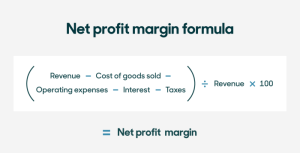
Understanding profit margins is crucial for businesses across all sectors. This exploration delves into the fascinating world of average profit margins, revealing the significant variations across industries. We’ll examine the factors driving these differences, from pricing strategies and operating costs to the impact of technological advancements and economic cycles. This analysis provides valuable insights for businesses seeking to optimize their profitability and understand their competitive landscape.
We will dissect the three key types of profit margins – gross, operating, and net – providing clear definitions, calculation methods, and illustrative examples. Furthermore, we’ll investigate how various industries perform, identifying those with consistently high or low margins and exploring the underlying reasons. The impact of external factors, such as government regulations and global economic conditions, will also be considered.
Profit Margins and Business Strategies
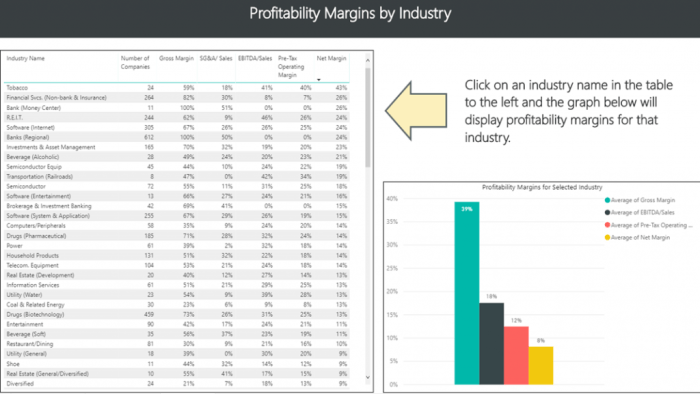
Improving profit margins is a crucial goal for any business aiming for sustainable growth and profitability. A higher profit margin signifies greater efficiency and a stronger financial position, allowing for reinvestment, expansion, and increased shareholder value. This section explores various strategies businesses can employ to enhance their profit margins.
Improving Profit Margins
Businesses can improve their profit margins through a multifaceted approach encompassing cost management, revenue enhancement, and strategic innovation. Focusing on efficiency in operations, streamlining processes, and optimizing pricing strategies are key components of this approach. For example, a manufacturing company might invest in automation to reduce labor costs, while a retail business might implement a dynamic pricing model to maximize revenue during peak seasons.
Effective marketing and sales strategies also play a crucial role in driving sales volume and increasing revenue, thereby contributing to higher profit margins.
Cost Management Strategies
Effective cost management is paramount to improving profit margins. This involves a thorough analysis of all expenses, identifying areas for potential reduction without compromising quality or customer satisfaction. Strategies include negotiating better deals with suppliers, optimizing inventory management to minimize storage costs and waste, and implementing energy-efficient practices to reduce utility expenses. For instance, a restaurant might negotiate lower prices for ingredients by partnering with local farmers, while a technology company might invest in cloud computing to reduce infrastructure costs.
Regular monitoring of expenses and benchmarking against industry standards are also crucial for identifying areas needing improvement.
Innovation’s Role in Profit Margin Enhancement
Innovation plays a vital role in maintaining and increasing profit margins. Introducing new products or services, improving existing offerings, or enhancing operational processes through technological advancements can significantly impact profitability. For example, a software company might develop a new software-as-a-service (SaaS) product to tap into a new market segment, while a food company might introduce a healthier version of its existing product to appeal to health-conscious consumers.
Furthermore, adopting innovative technologies such as artificial intelligence (AI) or machine learning (ML) can automate tasks, improve efficiency, and reduce operational costs, ultimately leading to higher profit margins.
Analyzing and Improving Profit Margins: A Flowchart
A systematic approach is necessary to effectively analyze and improve profit margins. The following flowchart illustrates a step-by-step process:[Diagram Description: The flowchart begins with a “Start” node. It then branches to “Analyze Revenue Streams,” followed by “Analyze Cost Structure.” These two branches converge into a “Identify Key Profit Drivers” node. Next, it branches to “Implement Cost Reduction Strategies” and “Implement Revenue Enhancement Strategies.” These two branches converge into a “Monitor and Evaluate Performance” node, which leads to a “Review and Adjust Strategies” node.
Finally, the flowchart ends with a “End” node. Each step involves detailed analysis and action planning, potentially incorporating data analytics and market research.]
External Factors Influencing Profit Margins
Profit margins, a crucial indicator of a business’s financial health, are not solely determined by internal factors like cost management and pricing strategies. External forces significantly impact a company’s ability to generate profits, often beyond its direct control. Understanding these external influences is vital for effective strategic planning and forecasting. This section explores several key external factors that can significantly shape profit margins across various industries.
Government Regulations
Government regulations, at both national and international levels, profoundly affect profit margins. Increased regulatory compliance costs, such as those associated with environmental protection, labor standards, or data privacy, can directly reduce profitability. For example, stricter emission standards in the automotive industry necessitate significant investments in research and development, potentially squeezing profit margins. Conversely, favorable regulations, such as tax breaks or subsidies for specific industries, can boost profit margins.
The impact varies significantly depending on the industry and the specific regulations involved; industries with high regulatory burdens, such as pharmaceuticals or finance, are often more susceptible to margin compression from new regulations.
Changes in Consumer Behavior
Shifts in consumer preferences and buying habits exert a considerable influence on profit margins. Increased demand for a particular product or service can lead to higher prices and increased profitability, while a decline in demand can force businesses to lower prices to remain competitive, thus reducing profit margins. The rise of e-commerce, for example, has forced many traditional retailers to adapt their business models and pricing strategies, often resulting in thinner profit margins due to increased competition and the need for lower prices to compete online.
Similarly, changing consumer preferences towards sustainable or ethically sourced products can impact profit margins, requiring businesses to adjust their supply chains and production processes, which may involve increased costs.
Global Economic Conditions
Global economic conditions play a pivotal role in shaping profit margins. Recessions or economic downturns often lead to reduced consumer spending, forcing businesses to contend with lower sales volumes and potentially decreased pricing power. Conversely, periods of economic growth and expansion can create favorable conditions for higher sales, increased pricing power, and improved profit margins. Fluctuations in exchange rates also significantly impact businesses operating internationally, affecting the cost of imported goods and the profitability of exports.
For instance, a strong dollar can make U.S. exports less competitive in global markets, impacting profit margins for export-oriented businesses.
Key External Factors Influencing Profit Margins
The following list summarizes key external factors that impact profit margins across various industries:
- Government regulations (environmental, labor, safety, etc.)
- Economic conditions (recessions, growth, inflation, unemployment)
- Consumer behavior (preferences, spending habits, demand fluctuations)
- Technological advancements (automation, innovation, disruption)
- Geopolitical events (wars, trade disputes, political instability)
- Natural disasters and climate change (supply chain disruptions, resource scarcity)
- Competition (market share, pricing pressure)
- Interest rates and access to capital
- Commodity prices (raw materials, energy)
Profit margin analysis is not merely an accounting exercise; it’s a strategic tool for understanding business performance and identifying areas for improvement. By examining industry benchmarks and understanding the influence of both internal and external factors, businesses can develop more effective pricing strategies, optimize cost structures, and ultimately enhance their long-term profitability. This comprehensive overview provides a framework for navigating the complexities of profit margin analysis and making informed decisions to drive sustainable growth.
FAQ
What is the difference between gross, operating, and net profit margin?
Gross profit margin considers only revenue and cost of goods sold. Operating profit margin includes operating expenses. Net profit margin accounts for all expenses, including taxes and interest.
How can a business improve its profit margin in a competitive market?
Strategies include optimizing pricing, streamlining operations to reduce costs, improving efficiency, and focusing on innovation to differentiate products or services.
Are there reliable sources for obtaining industry-specific profit margin data?
Industry reports from market research firms, government statistics, and financial databases often provide this information, although access may require subscriptions.
What impact does inflation have on profit margins?
Inflation can squeeze profit margins by increasing the cost of goods sold and operating expenses while potentially limiting pricing power.