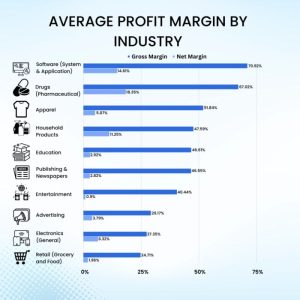
Understanding profit margins is crucial for any business, regardless of size or industry. A strong grasp of profit margins allows for informed decision-making, from pricing strategies to cost-cutting measures. This guide explores the intricacies of profit margin calculation, providing a comprehensive overview of various types of margins, practical applications, and advanced concepts to empower you with the knowledge to optimize your business’s financial health.
We’ll delve into the mechanics of calculating gross, operating, and net profit margins, illustrating their significance with real-world examples. We’ll also examine how different profit margin calculators can streamline the process, offering a comparison of their features and benefits. Beyond the calculations, we’ll explore how profit margin data informs strategic business decisions, from pricing adjustments to resource allocation.
Understanding Profit Margin Calculators
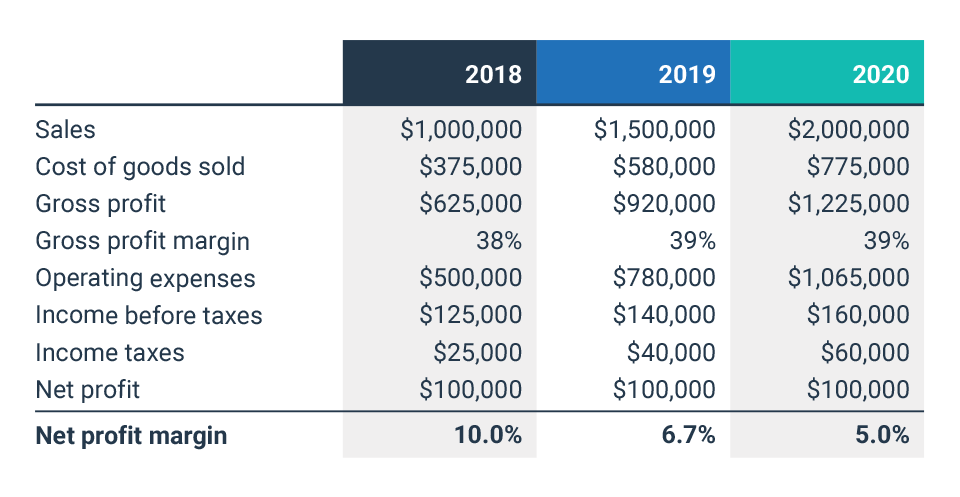
Profit margin calculators are invaluable tools for businesses of all sizes, providing crucial insights into profitability and financial health. Understanding the different types of profit margins and how to calculate them accurately is essential for effective financial management and strategic decision-making. This section will delve into the specifics of profit margin calculations, exploring the various types and their applications.
Types of Profit Margins
Profit margins are expressed as a percentage and represent the profitability of a business relative to its revenue. There are three main types: gross profit margin, operating profit margin, and net profit margin. Each offers a different perspective on a company’s financial performance.
- Gross Profit Margin: This measures the profitability of a business after deducting the cost of goods sold (COGS) from revenue. It shows how efficiently a company manages its production or procurement costs. Examples of businesses that heavily rely on gross profit margin analysis include manufacturers (assessing the efficiency of their production lines) and retailers (evaluating the markup on their products).
- Operating Profit Margin: This indicates profitability after deducting operating expenses (such as salaries, rent, and utilities) from gross profit. It reveals how well a company manages its overall operations and efficiency. Businesses in service industries, such as consulting firms or law practices, often focus on operating profit margin as COGS is less relevant to their business model.
- Net Profit Margin: This represents the ultimate profitability after all expenses, including taxes and interest, are subtracted from revenue. It provides the clearest picture of a company’s overall financial success. Most businesses, regardless of industry, ultimately use net profit margin as a key performance indicator (KPI) for overall profitability.
Key Components for Accurate Profit Margin Calculation
Accurate profit margin calculation hinges on the precise determination of revenue and the relevant expenses. Inaccurate data will lead to misleading results and poor decision-making.
- Revenue: This is the total income generated from sales of goods or services. It’s crucial to ensure accurate accounting of all sales, including discounts and returns.
- Cost of Goods Sold (COGS): This includes all direct costs associated with producing goods or services. For manufacturers, this encompasses raw materials, direct labor, and manufacturing overhead. For retailers, it’s the cost of purchasing the goods they sell.
- Operating Expenses: These are all expenses incurred in running the business, excluding COGS. Examples include salaries, rent, utilities, marketing, and administrative costs.
- Taxes and Interest: These are deducted to arrive at the net profit margin. Accurate accounting for these items is essential for a true reflection of profitability.
Simple Profit Margin Calculator Formula
A basic profit margin calculation can be expressed using simple arithmetic:
Profit Margin = (Revenue – Expenses) / Revenue – 100%
Where “Expenses” represents the relevant expenses for the specific type of profit margin being calculated (COGS for gross profit margin, COGS + operating expenses for operating profit margin, and all expenses for net profit margin).
Comparison of Online Profit Margin Calculators
Numerous online profit margin calculators are available, each with varying features and pricing models. The following table compares some examples. Note that features and pricing are subject to change.
| Calculator Name | Features | Pricing | Pros/Cons |
|---|---|---|---|
| Calculator A | Basic calculations for gross, operating, and net profit margins; downloadable reports | Free | Pros: Easy to use, free. Cons: Limited features, no advanced analysis. |
| Calculator B | Advanced calculations, scenario planning, integration with accounting software | Subscription-based (e.g., $10/month) | Pros: Comprehensive features, robust analysis. Cons: Costly, may require a learning curve. |
| Calculator C | Gross profit margin calculation, simple interface | Free (with ads) | Pros: Simple and easy to use. Cons: Limited to gross profit margin, intrusive ads. |
| Calculator D | Multiple profit margin calculations, customizable reports, data import options | One-time purchase (e.g., $50) | Pros: Comprehensive features, good value for money. Cons: One-time purchase may not be suitable for all users. |
Using a Profit Margin Calculator
Profit margin calculators are invaluable tools for businesses of all sizes, providing a quick and easy way to assess profitability. Understanding how to use one effectively is key to making informed business decisions. This section details the process of using a profit margin calculator, from data input to interpreting the results.
Step-by-Step Guide to Using a Profit Margin Calculator
Most profit margin calculators follow a similar structure. Typically, you’ll need to input three key figures: revenue, cost of goods sold (COGS), and operating expenses. The calculator then performs the necessary calculations to determine your profit margin. Let’s break down each step. First, accurately enter your total revenue.
This represents the total income generated from sales during a specific period. Next, input your cost of goods sold (COGS). This includes all direct costs associated with producing your goods or services. Finally, enter your operating expenses. These are the costs of running your business, excluding COGS, such as rent, salaries, and utilities.
Once all data is entered, the calculator will automatically compute your profit margin.
Accurate Data Input: Revenue, COGS, and Operating Expenses
Accuracy is paramount when using a profit margin calculator. Inaccurate data will lead to inaccurate results, potentially hindering sound business decisions. Revenue should reflect the total sales for the period, net of any returns or discounts. COGS should include only direct costs; indirect costs belong under operating expenses. For example, the raw materials used to create a product are part of COGS, while the salary of the marketing manager is an operating expense.
Operating expenses should encompass all indirect costs involved in running the business, ensuring a comprehensive picture of overhead. Using consistent accounting practices across all entries is crucial for reliable results.
Interpreting the Calculated Profit Margin Percentage
The profit margin percentage represents the proportion of revenue that remains as profit after deducting all costs. A higher percentage indicates greater profitability. For instance, a 20% profit margin means that for every $1 of revenue, $0.20 is profit. This percentage can be used to compare profitability across different periods or against industry benchmarks. Understanding your profit margin allows you to identify areas for improvement, such as reducing costs or increasing prices.
A consistently low profit margin may signal the need for strategic adjustments.
Potential Data Input Errors and Avoidance Strategies
Common errors include misclassifying costs (assigning direct costs to operating expenses or vice-versa), inaccurate revenue figures (omitting sales or including non-revenue items), and inconsistencies in accounting periods. To avoid these errors, maintain detailed and organized financial records, use consistent accounting methods, and double-check all entries before submitting them to the calculator. Regularly reviewing your financial statements can also help detect discrepancies early on.
Employing accounting software can help automate data entry and minimize the risk of manual errors.
Best Practices for Utilizing Profit Margin Calculators Effectively
To maximize the effectiveness of a profit margin calculator, use it regularly to monitor your profitability. Compare your profit margins over time to track trends and identify areas needing attention. Benchmark your margins against industry averages to assess your competitive position. Use the calculator for different segments of your business if applicable, allowing for a more granular analysis of profitability.
Remember that the calculator is a tool; its accuracy depends on the accuracy of your input data. Always ensure your data is reliable and reflects your business’s true financial picture.
Mastering profit margin calculation and analysis is a cornerstone of successful business management. By understanding the different types of profit margins, utilizing effective calculation tools, and interpreting the results within the broader context of your business strategy, you can gain valuable insights into your financial performance and make data-driven decisions to enhance profitability and long-term sustainability. Remember to regularly monitor your profit margins and adapt your strategies accordingly to navigate the dynamic business landscape.
FAQs
What is the difference between gross, operating, and net profit margin?
Gross profit margin focuses on the profitability of sales, subtracting the cost of goods sold from revenue. Operating profit margin considers operating expenses, while net profit margin accounts for all expenses, including taxes and interest.
How often should I calculate my profit margin?
Ideally, you should calculate your profit margin regularly, at least monthly, to monitor performance and identify areas for improvement. More frequent calculations (weekly or even daily, depending on your business) can provide a more granular view of your financial health.
Can I use a spreadsheet to calculate profit margins instead of a dedicated calculator?
Yes, spreadsheet software like Microsoft Excel or Google Sheets can be used to calculate profit margins. However, dedicated calculators often provide a more streamlined and user-friendly interface.
What if my profit margin is negative?
A negative profit margin indicates that your expenses exceed your revenue. This requires a thorough review of your costs, pricing strategy, and overall business model to identify areas for improvement and cost reduction.